octobergm

An offline baseball game for iPhone and iPad

Thirty clubs. One of them is yours.

You're the general manager and the manager. Build the roster, call the game pitch by pitch, and try to still be standing in October. Every one of the 2,430 games in a season is played out in full on your iPhone or iPad, and none of it is sent anywhere.

Offline Free to start No subscription No ads No accounts Nothing collected
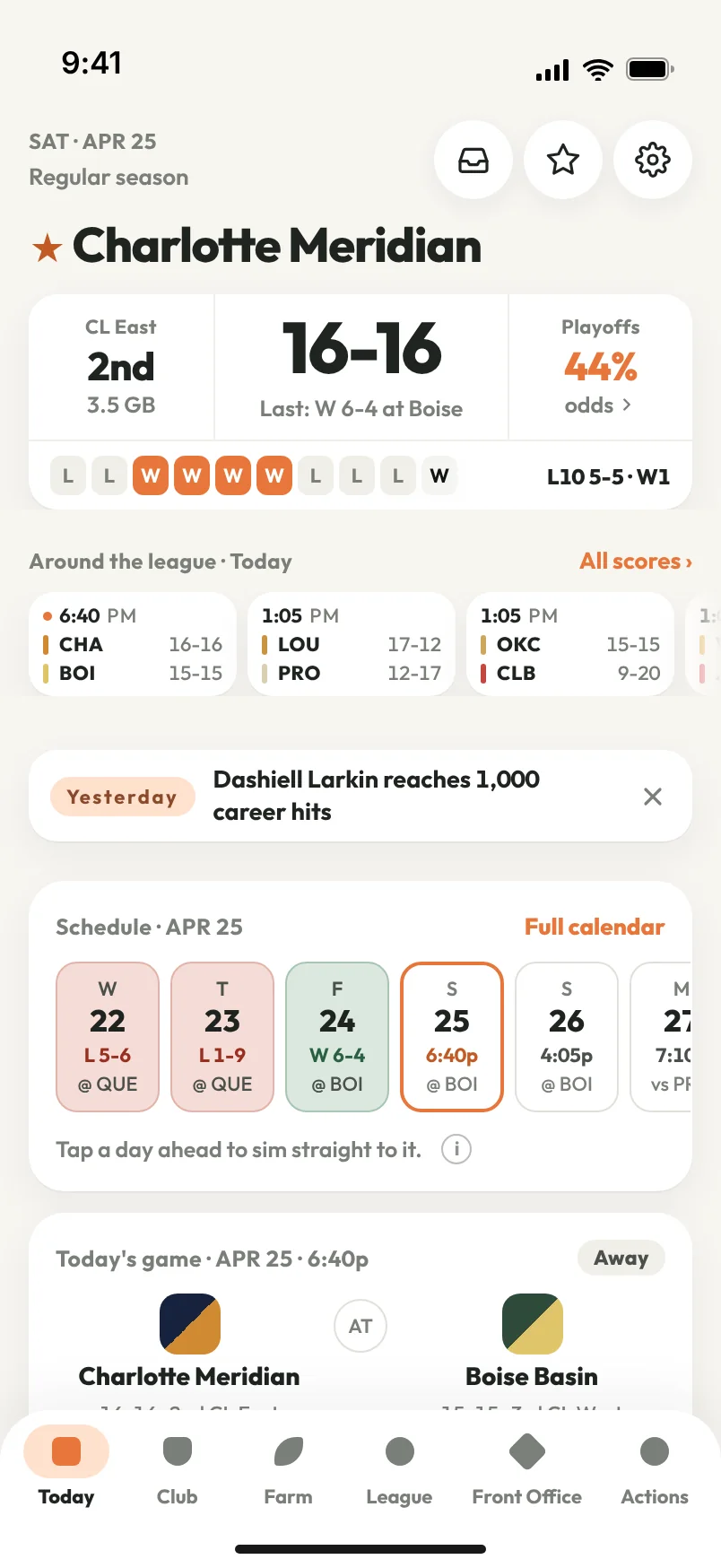
The Today screen: Charlotte Meridian at 16 and 16, second in the division with 44% playoff odds, the last ten results, the scores around the league, the week's schedule and tonight's game.
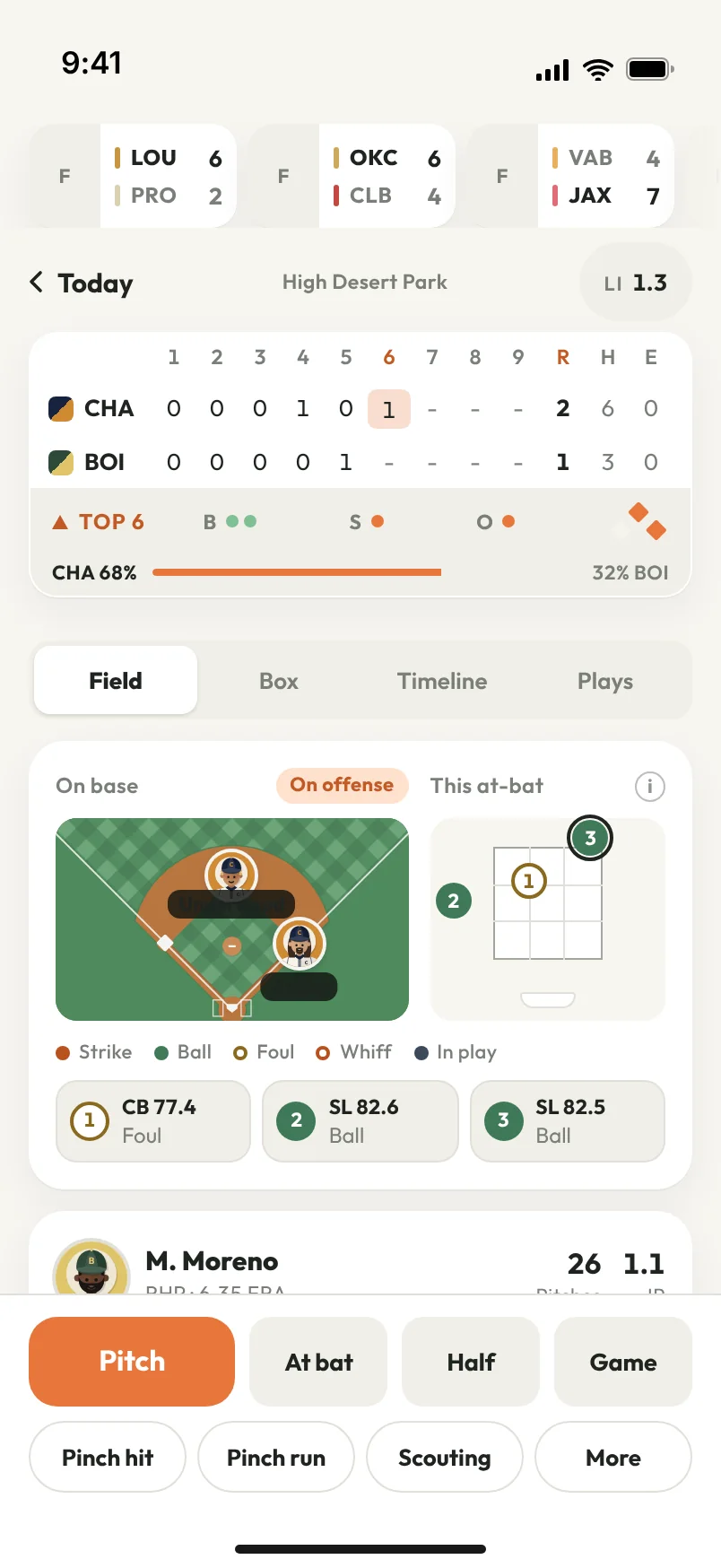
The live game: the line score in the top of the sixth, two runners on, the count, the pitch map for a three-pitch at-bat, and the Pitch button.
Clubs30every one invented
Games a season162then October
Players1,600+with a farm underneath
SimulatedEvery pitchof every game

Your club

The first thing the game asks is which one.

Each club comes with a market, a plan the owner expects you to follow, and a park with its own habits. Tap one. The page will follow you around.

CL East · Richmond

Richmond Ironsides

RIC
PlanBalancedNo glaring hole, no obvious edge
MarketMid marketAverage budget
DivisionCL Eastfour rivals, nineteen games each
Foundry Commons

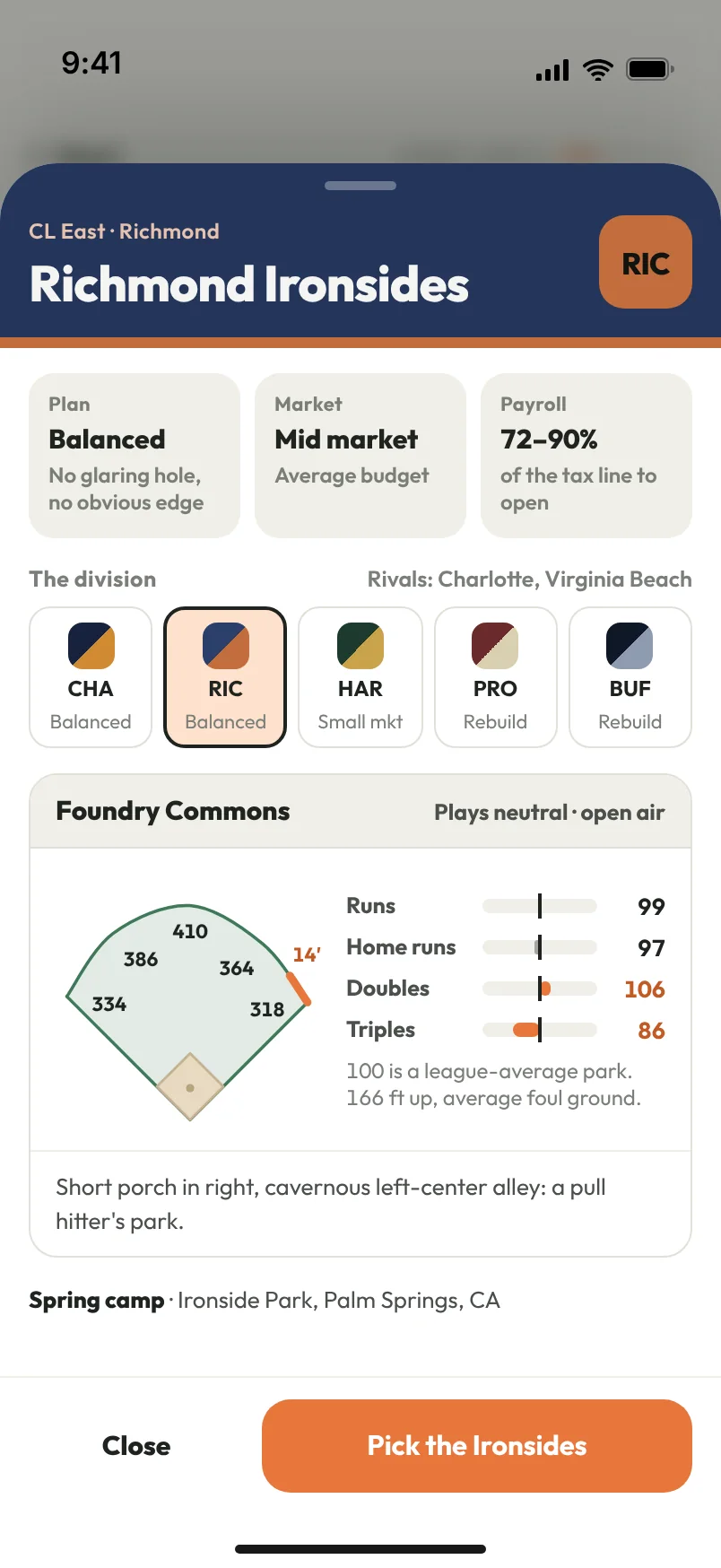
Short porch in right, cavernous left-center alley: a pull hitter's park.

Thirty parks, all drawn to scale from their fence distances. Take the Richmond job

The job

Both chairs are yours: the office and the dugout.

A 26-man roster, a 40-man behind it and a farm system under that. You make the trades and you make the pitching changes, and twenty-nine other front offices are doing the same thing to you.

1
Build the rosterDraft, trade, sign and develop. Waivers, arbitration, options, a luxury tax and a deadline, with draft picks on the table.
2
Manage the gamesSet the lineup, the rotation and the bullpen. Warm an arm before you need him. Play pitch by pitch, or sim a day, a week or the season.
3
Get through OctoberTake the division or a wild card, survive the bracket, lift the Ashwood Cup. Then the winter has its own work, and you do it all again.

The screens

Every screen is a header, the numbers it runs on, then cards.

Nothing is cut off and nothing is too small to tap. It comes in light and dark, and follows whatever your phone is set to.

Appearance
The Today screen: the record, the division place and playoff odds on a scoreboard, the last ten results, the scores around the league, the week's schedule and tonight's game with both starters.

Today

Everything before the first pitch.

Today opens on a scoreboard that follows the calendar: the race in season, camp in spring, the series in October. Under it, the scores around the league as they happen, the schedule, the matchup, and every decision waiting on you.

  • Start the game, sim it, or sim the series
  • Tap any day ahead to sim straight to it
  • You decide what stops a sim, and what never does
The live game: the line score, the count as lamps, win probability, two runners drawn on the infield, the pitch map with each pitch's type and speed, and the Pitch button.

The live game

Call it pitch by pitch.

The line score sits on top. Under it, your runners stand on their bases, the pitch map shows where every pitch of the at-bat crossed the plate, and the pitcher and the hitter are face to face. One big Pitch button, with the at-bat, the half inning and the rest of the game beside it.

  • Pinch hit, pinch run, and warm the bullpen before you need it
  • Exit velocity, launch angle and distance on every ball in play
  • Win probability that moves with every pitch
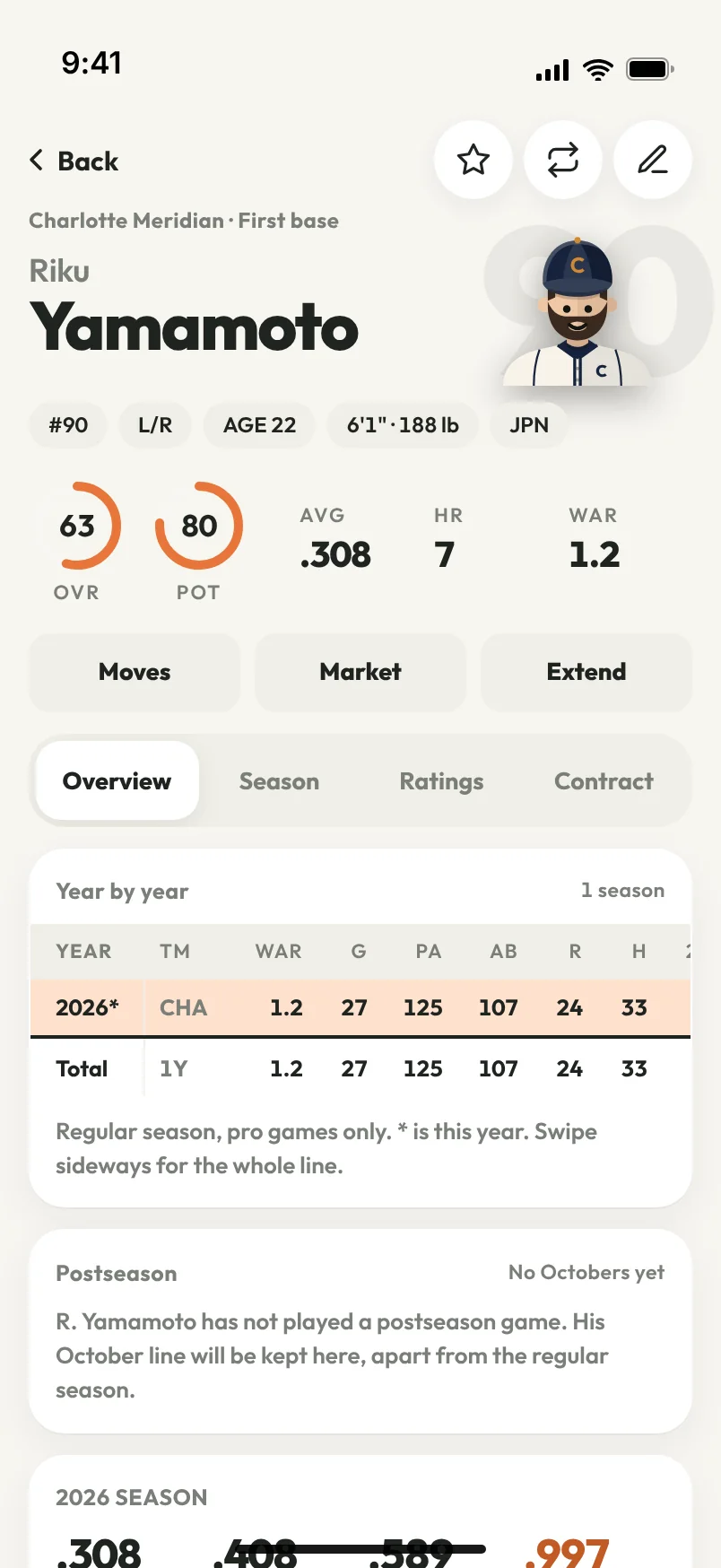
A player page: his portrait in front of his number, overall and potential as rings, this season's line, and the year-by-year table.

The player

Every player has a page.

His portrait in front of his number, overall and potential as rings, and this season's line. Below it: the year-by-year table, a scouting report, platoon splits, and percentile ranks for contact quality, discipline, running and fielding.

  • Exit velocity, barrels, wRC+, FIP and WAR
  • Year by year like a reference page, with an October table
  • A development card: where he is now, and his ceiling
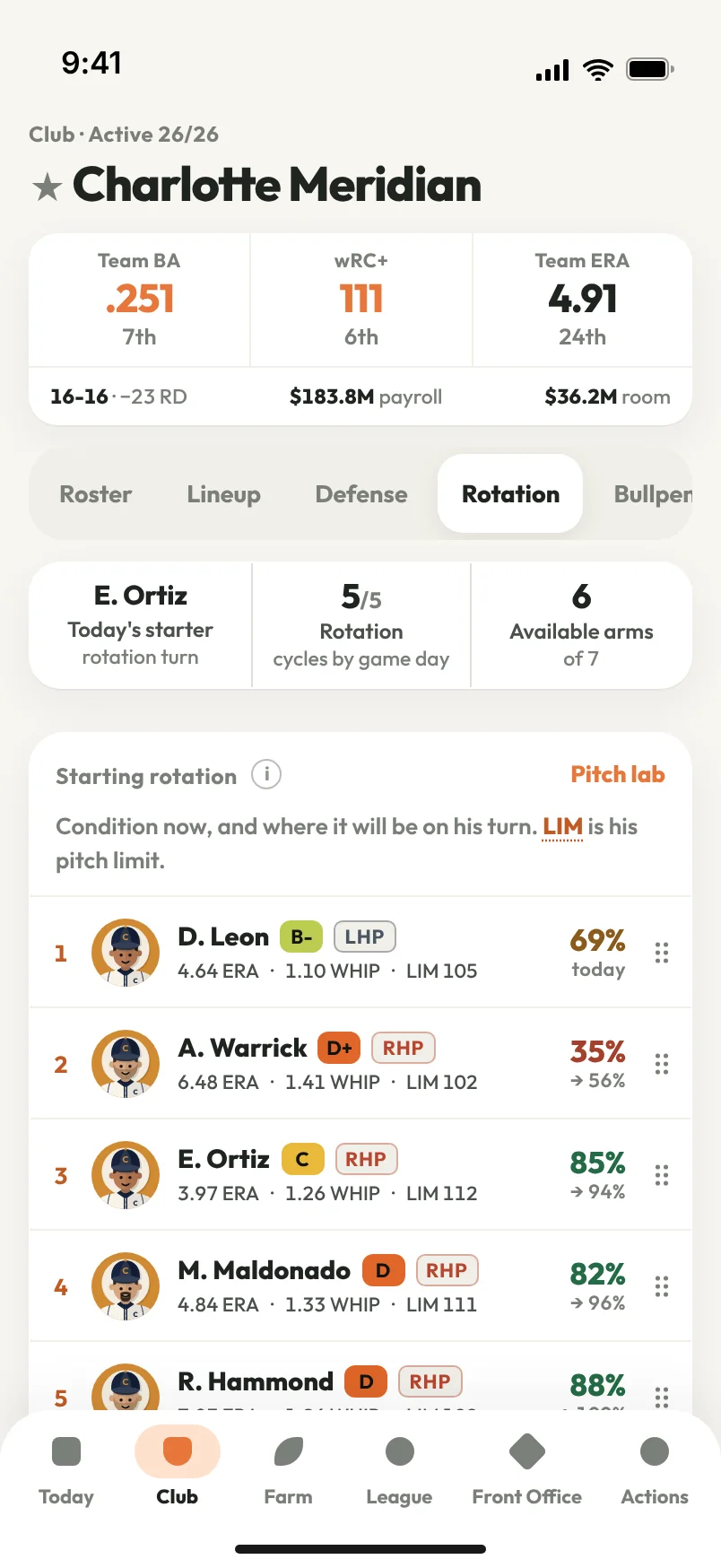
The Club screen on the Rotation tab: team batting average, wRC+ and ERA with league ranks, today's starter, and the five starters with a grade, a stat line, a condition meter and their readiness for the next turn.

The club

Twenty-six, forty, and a farm underneath.

Team average, wRC+ and ERA with their league ranks, then record, payroll and room. One player row is used everywhere: portrait, grade, stat line, condition, overall and potential.

  • A lineup against each hand, with projected runs a game
  • Auto lineup picks the best nine; Best order keeps yours
  • Defense, rotation, bullpen, the injured list and the 40-man
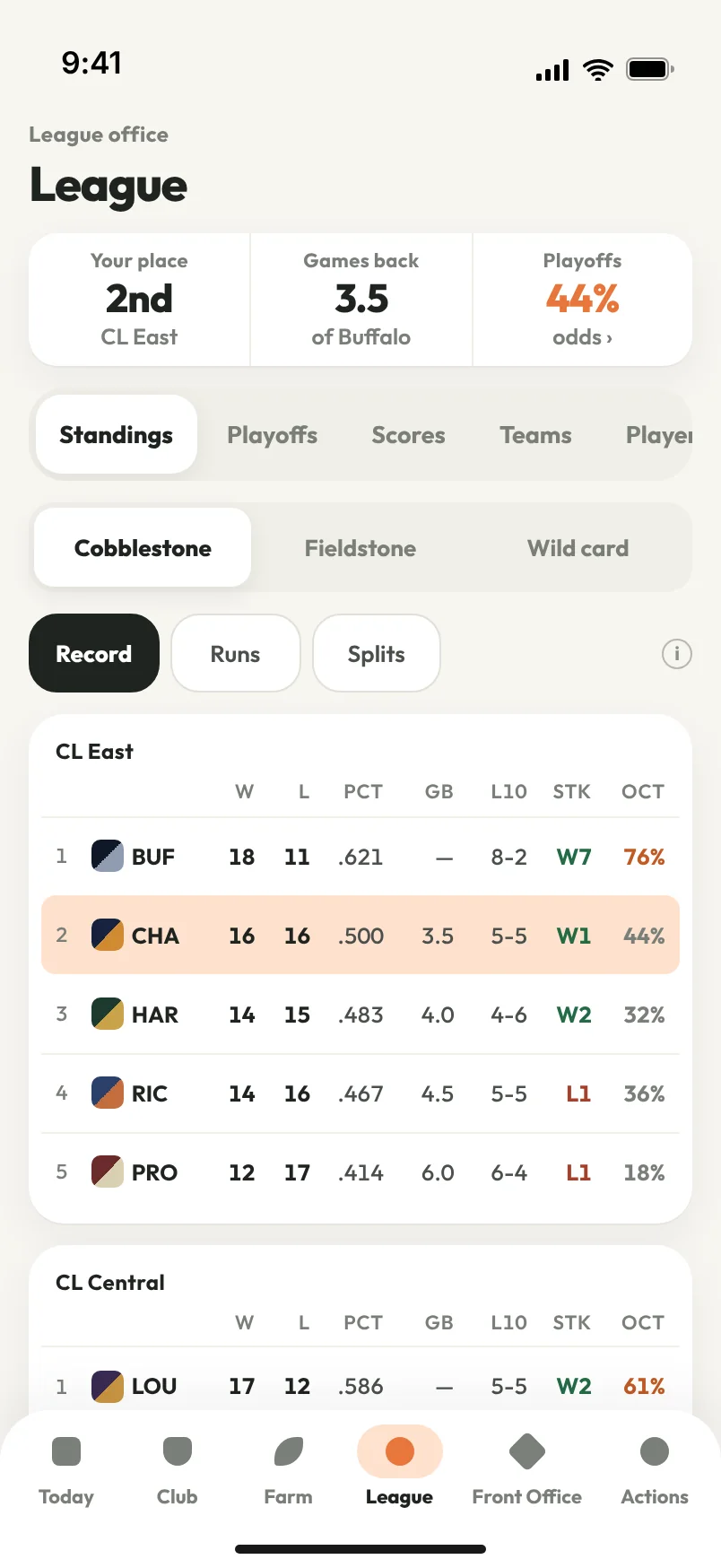
The League screen: your place, games back and playoff odds on a scoreboard, then division standings with wins, losses, games back, last ten, streak and October odds.

The league

Two leagues, six divisions, one race.

The Cobblestone and the Fieldstone, three divisions each. Standings by record, runs or splits, a wild-card table, and October odds that move every night.

  • Scores, leaders, teams, players and news
  • A projected bracket all summer, a real one in October
  • Twenty-nine other front offices making their own moves
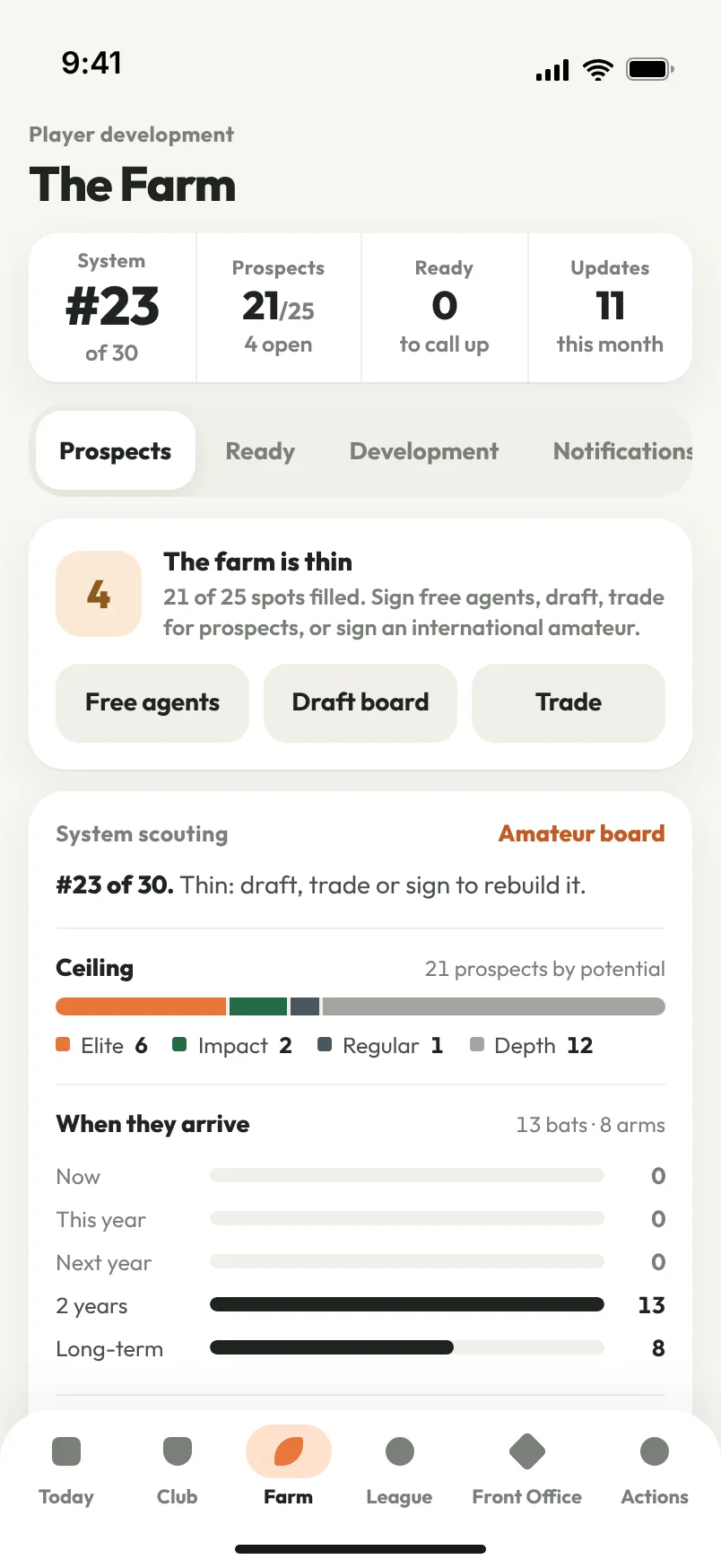
The Farm screen: the system's rank out of thirty, prospects, who is ready and this month's updates on a scoreboard, then the ceiling split and when the prospects arrive.

The farm

Grow your own.

The system's rank, how its ceilings split, and when the prospects arrive. Each one has a ceiling and an ETA, and plays a real minor-league season, a plate appearance at a time.

  • A scouting budget that sharpens every grade you see
  • A six-round amateur draft and international signings
  • Development notes that say what moved, and why
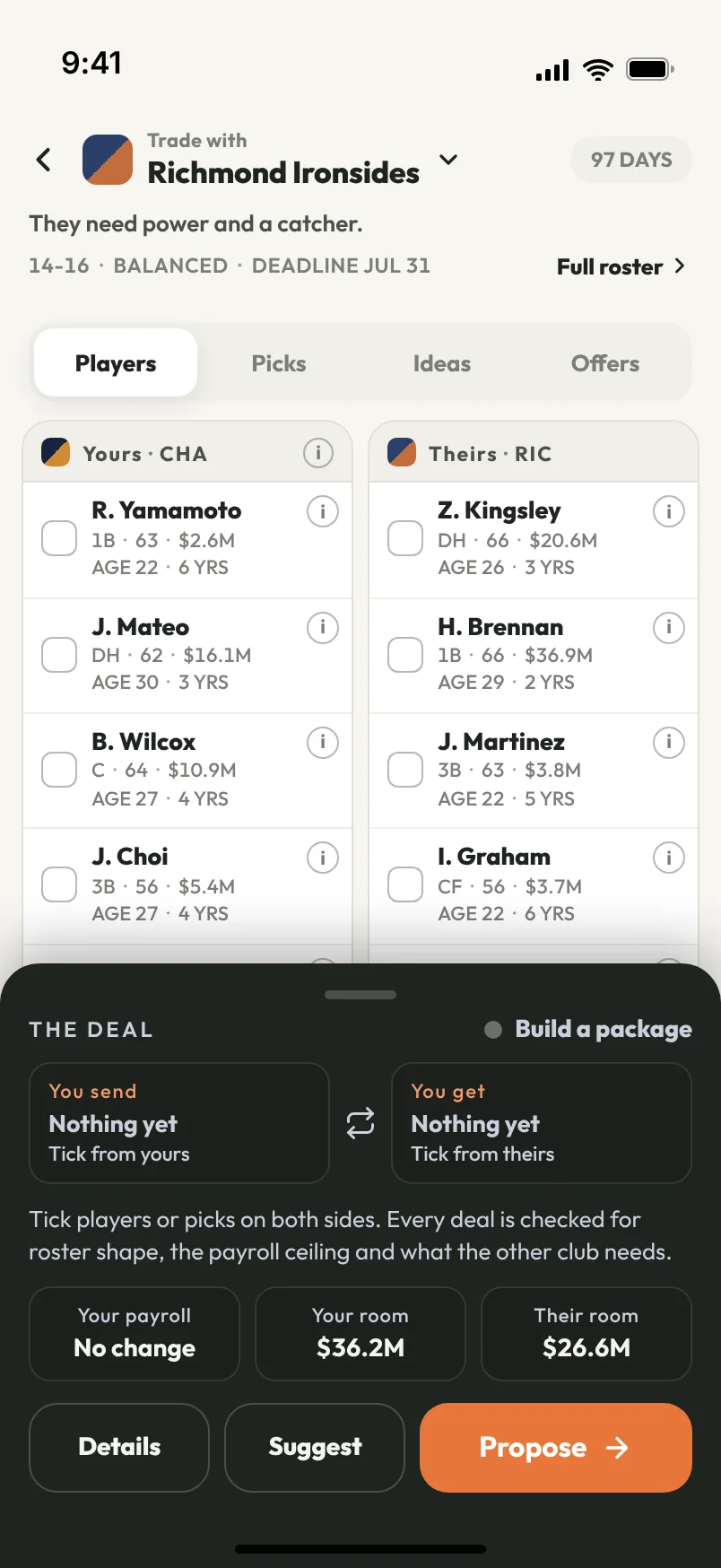
The trade center: your roster and the other club's side by side, and a dark tray at the bottom holding the deal, with payroll and room for both clubs and a Propose button.

The trade center

Two rosters, one deal.

Tick players and picks on both sides and the deal builds in a tray at the bottom: value both ways, payroll and room for both clubs, cash and retained salary.

  • Other clubs bring you offers, and say what they are thinking
  • A market tab with the best package for every player
  • Lowball a club and it stops taking your calls for two weeks
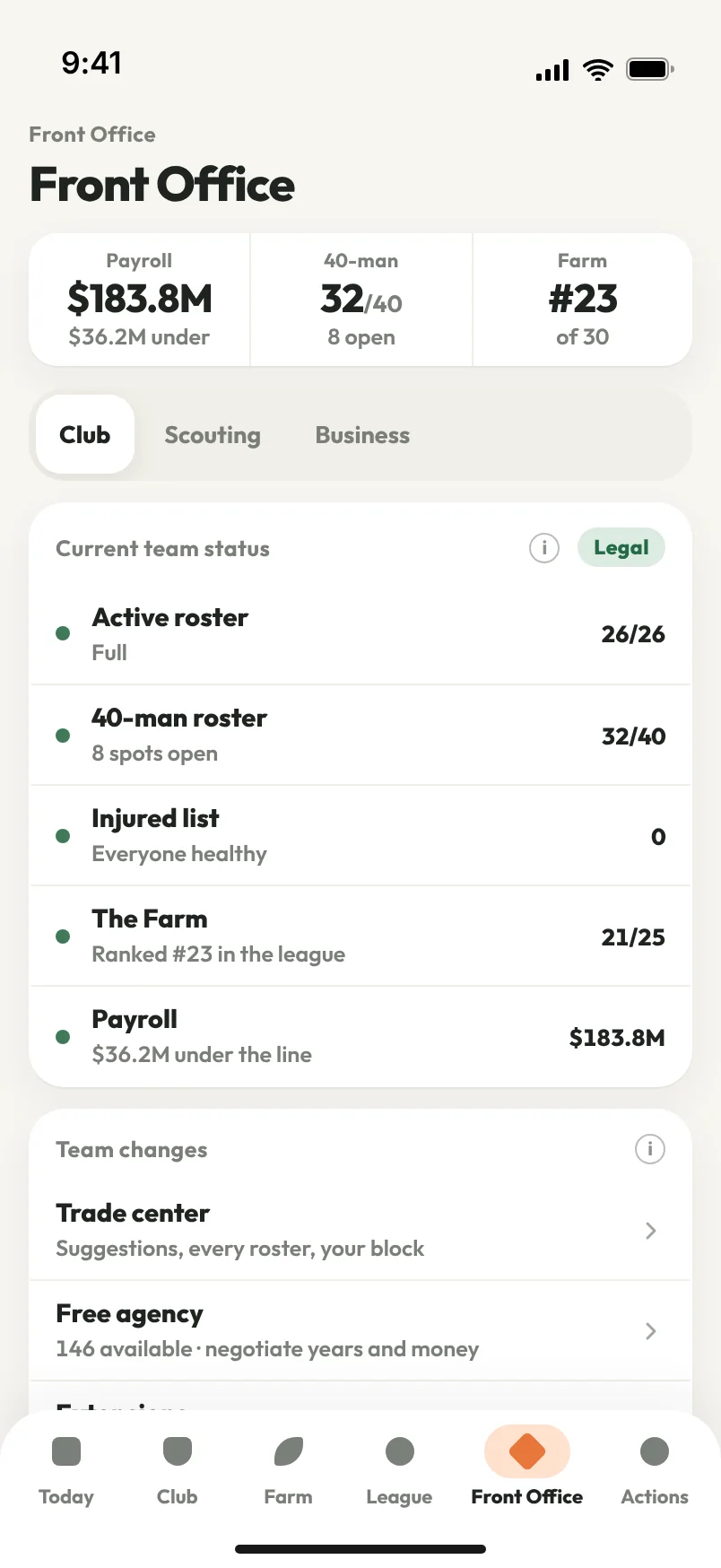
The Front Office screen: payroll, the 40-man and the farm rank on a scoreboard, the club's status line by line, and the way into the trade center and free agency.

The front office

The whole operation.

Payroll against the tax line, the 40-man and the farm's rank. From here: free agency, extensions, arbitration, department budgets, a coaching staff, and an owner with a mandate for the year.

  • Rival clubs can outbid you for the best free agents
  • One button clears the routine and reports every move
  • Contracts, trade requests and award ballots stay yours
Faces

The players have faces.

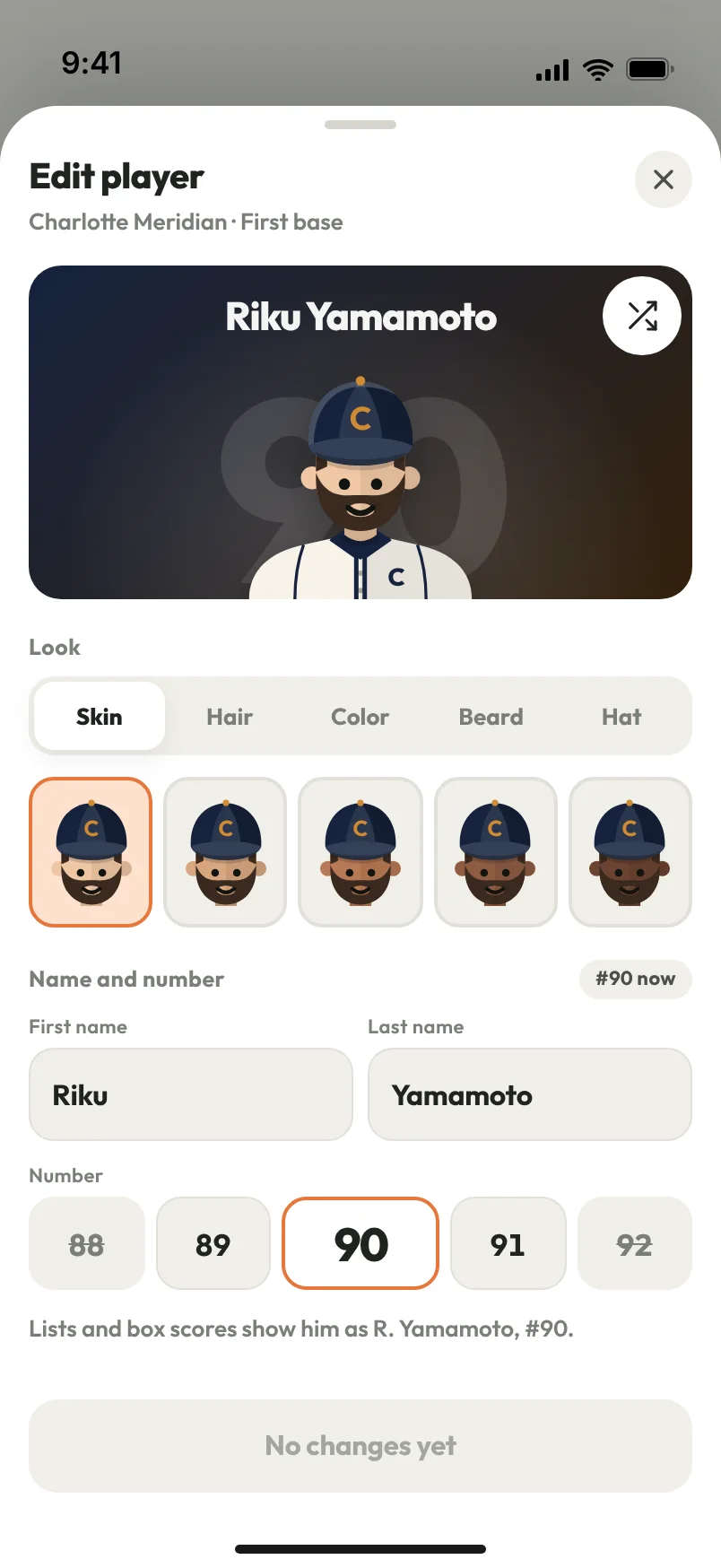
Every portrait is drawn in his club's colours, and the same man always looks the same. On your own club a pencil opens his look, his name and his number.

The Edit player sheet: a large portrait of Riku Yamamoto in his cap, five skin-tone tiles to choose from, his first and last name, and his number.
Thirty parks

Every park is drawn to scale.

Each club has a park card: the field with its fences, the tall walls marked, and how the park plays for runs, home runs, doubles and triples.

Picking a club: the Richmond Ironsides, their plan, market and payroll, their division, and Foundry Commons drawn to scale with its fence distances and park factors.

The year

The calendar never stops.

A season is one lap: camp, 162 games, a deadline, a bracket, and a winter with its own work. Start a save in the spring, on Opening Day, at the break or in October.

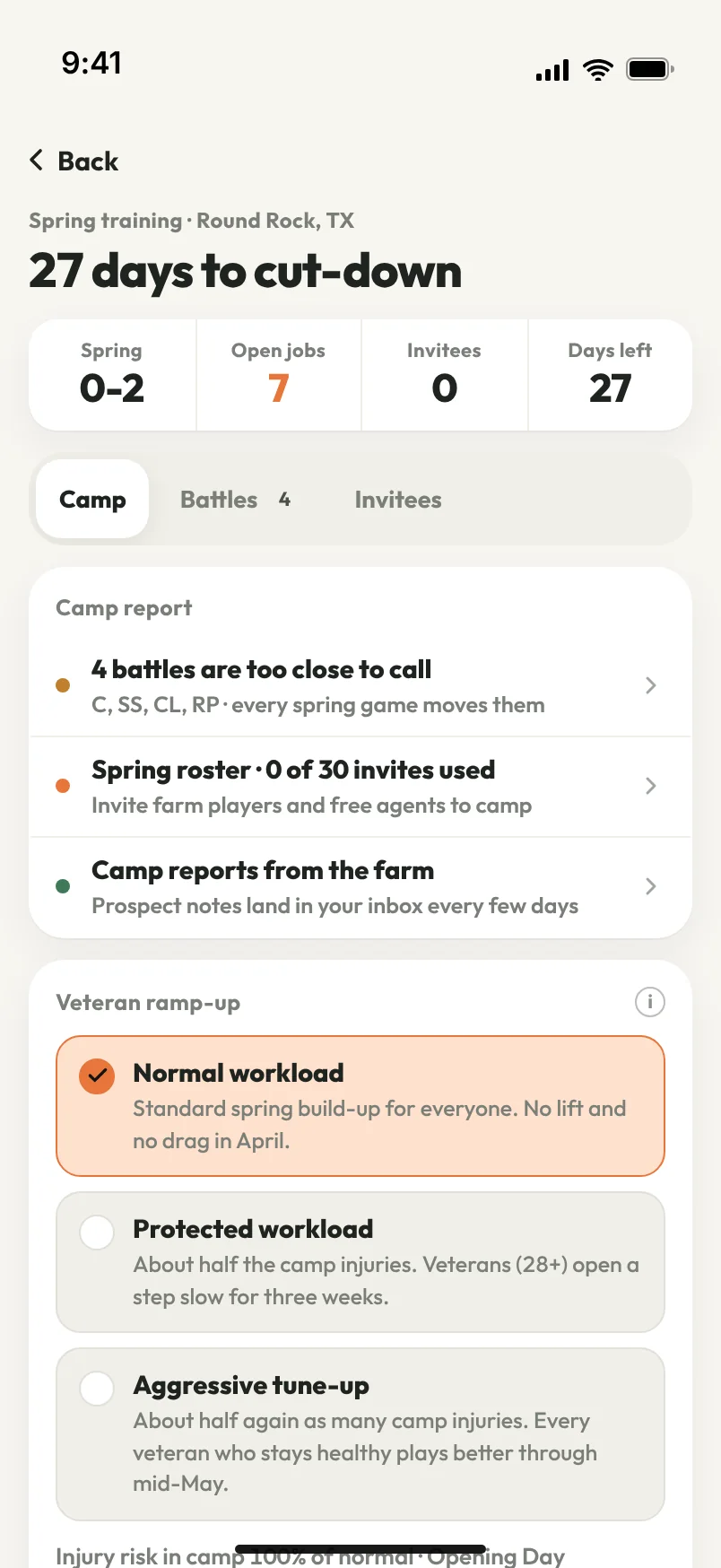
Spring training: 27 days to cut-down, the spring record, open jobs and invitees, and the camp report.

The engine

Not a dice roll. A ball game.

A season is 2,430 games and every one of them is played out in full, pitch by pitch, including the ones you never watch. Left alone for six full seasons, here is what the league does.

Runs a game4.53per club
Batting average.240league-wide
Strikeouts22.7%of plate appearances
ERA4.20league-wide
What the league does, left alone6 seasons · 14,580 games

Try an at-bat

Throw a pitch.

0–0
Top 1, nobody out. Tap Pitch and see where it goes.

A toy for this page, drawn the way the app draws an at-bat. The real games are in the app.

Every pitch

Nothing is skipped.

The box scores, the leaderboards and the career pages are the record of games that actually happened, one pitch at a time, in a league that keeps playing like baseball year after year.

The live game in October GM: the line score, the count, runners on the infield and the pitch map.
Data not collected

Offline, always.

No account, no ads, no tracking, and the game itself never goes online. The whole game is on your iPhone or iPad, and so are your saves. It plays in airplane mode, on a plane, in a basement, anywhere. Spring training is on the house, and so is your first save. The season ticket ($4.99) unlocks the full game, from Opening Day through October and every winter after, and extra save slots are $2.99 each. One-time purchases through the App Store, no subscription.

Accounts0Nothing to sign in to
Ads and trackers0Nothing follows you
Servers0The game never phones home
Subscriptions0Season ticket $4.99, extra saves $2.99, each bought once

The Richmond job is open.

Thirty clubs are hiring. The Ironsides would like a word.

Coming soon to the App Store